There are rehabilitation stories that remind us why we do what we do. This is one of them.
In June 2021, fishermen found a loggerhead turtle caught in fishing gear in the Guadiana River, around 19 km from the sea. Unable to reach the surface to breathe, the animal was rescued and brought to Porto d’Abrigo, the Zoomarine Algarve rehabilitation centre. The diagnosis? Anaemia and a fishing hook lodged in her stomach.
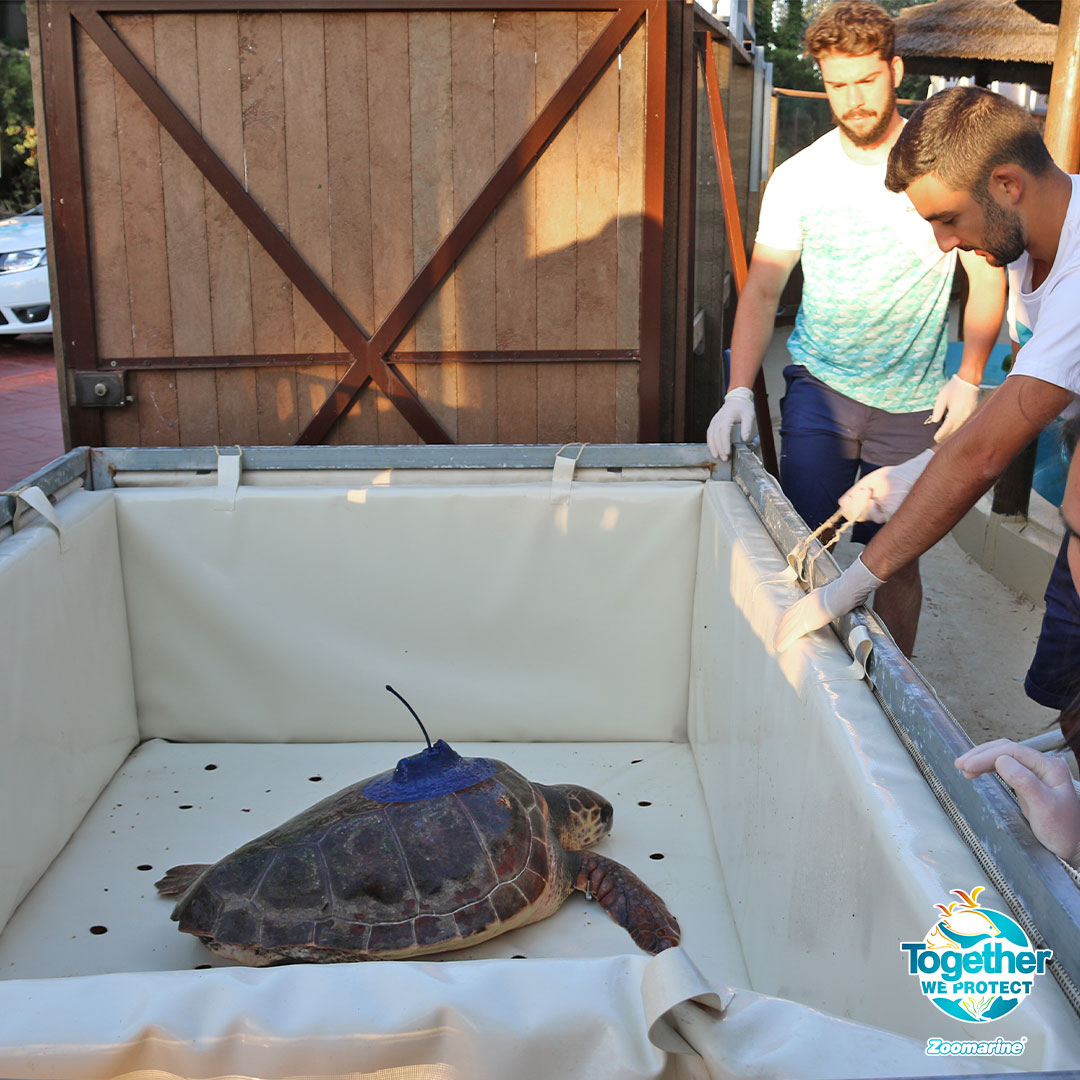
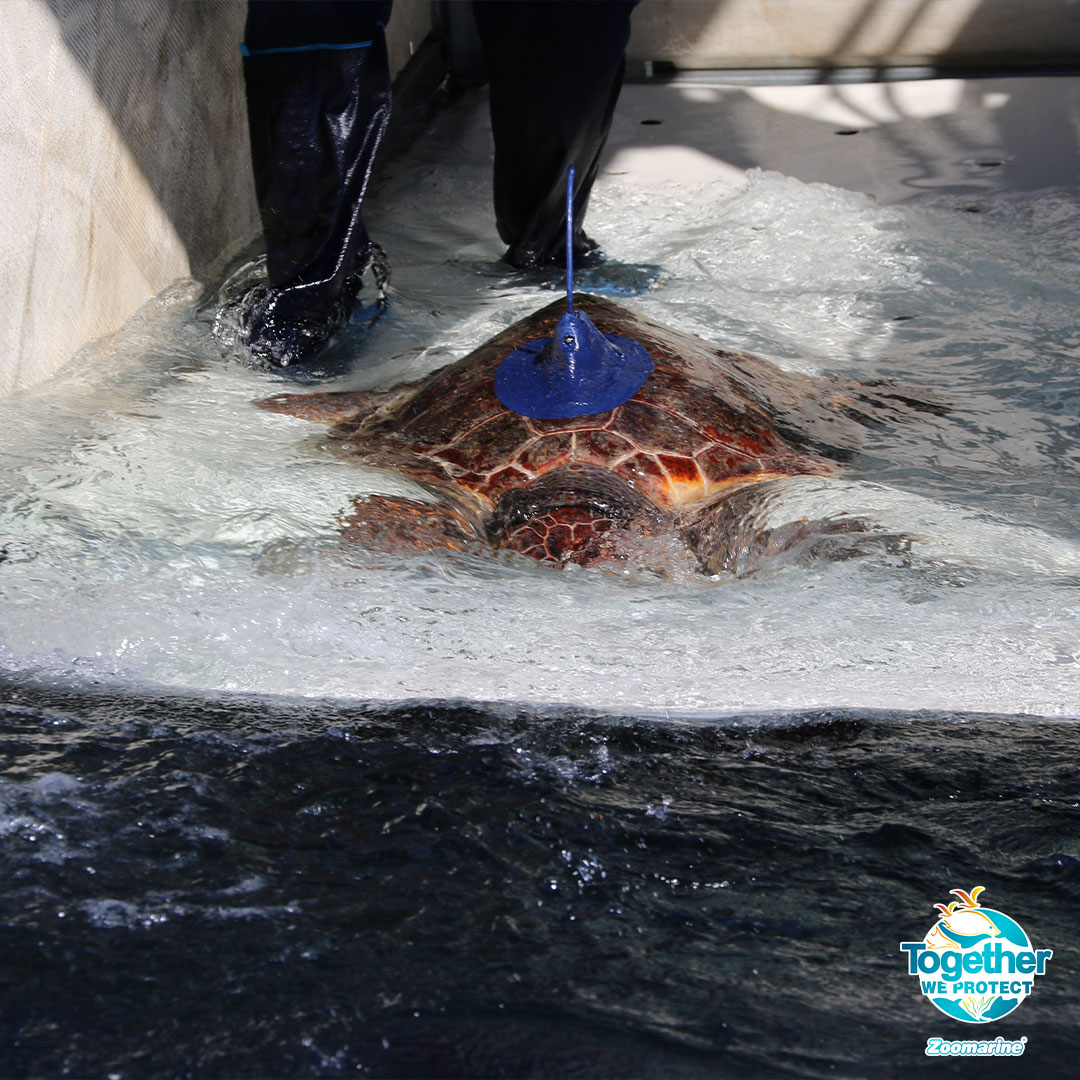
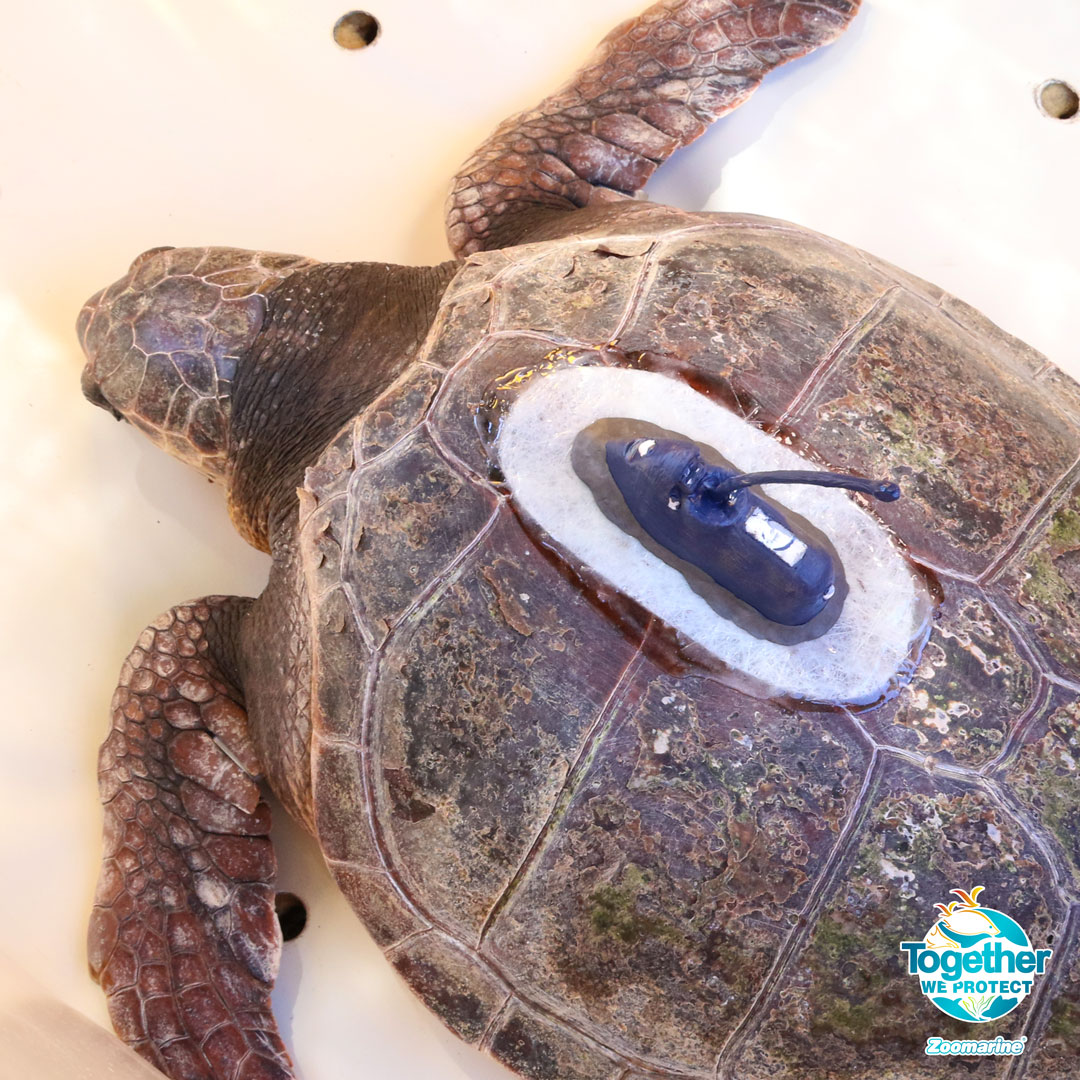
Salina: that was the name given to it during her rehabilitation. Twelve months later, weighing 51.8 kg and in excellent health condition, it was returned to the ocean. But not without first fitting it with a satellite transmitter and collecting a blood sample for genetic analysis. Because we wanted to know: would it survive? Where would it go? And where had it come from?
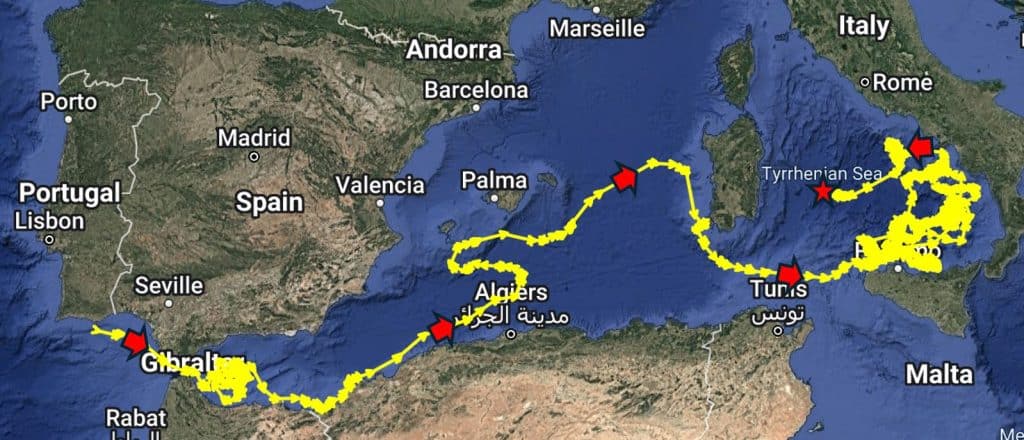
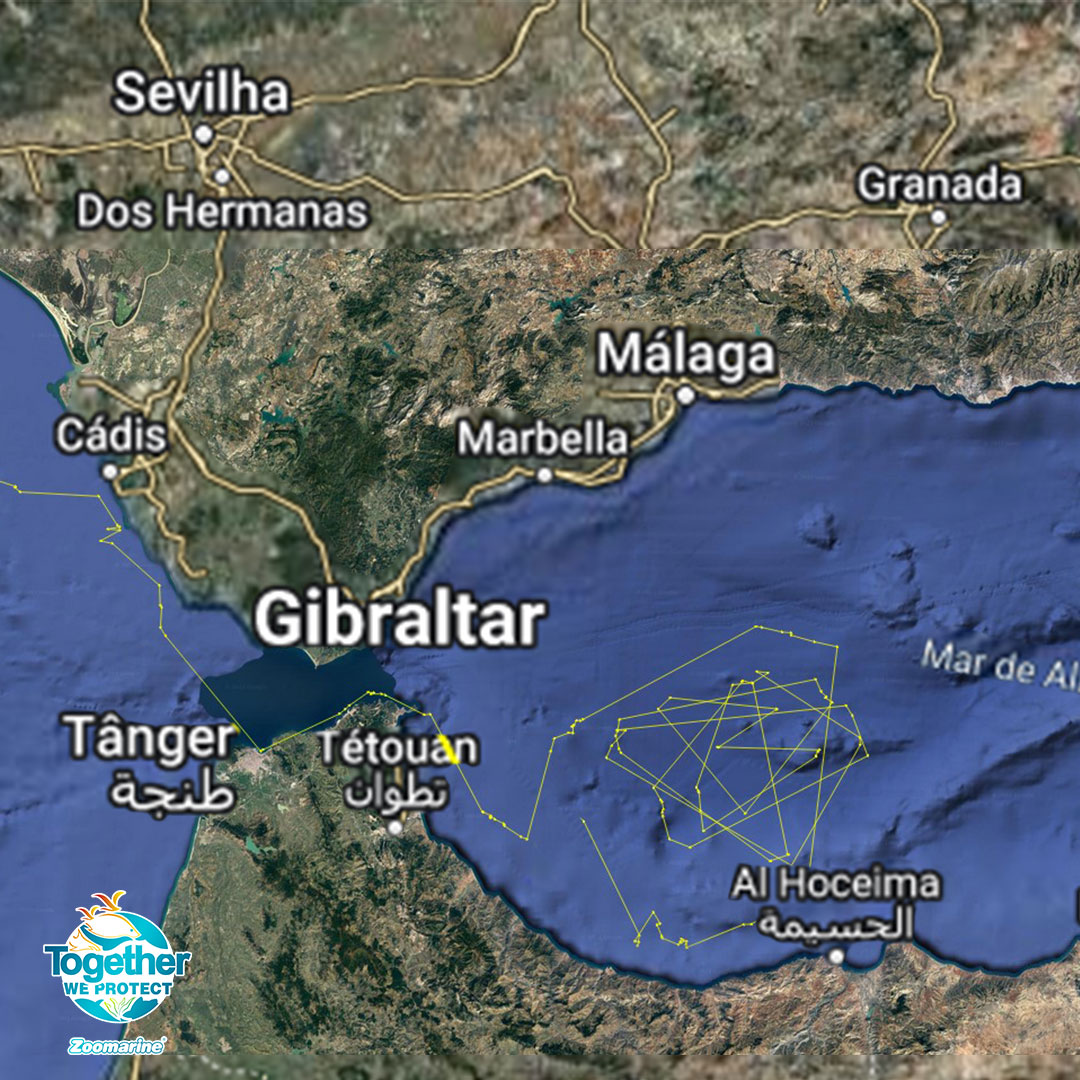
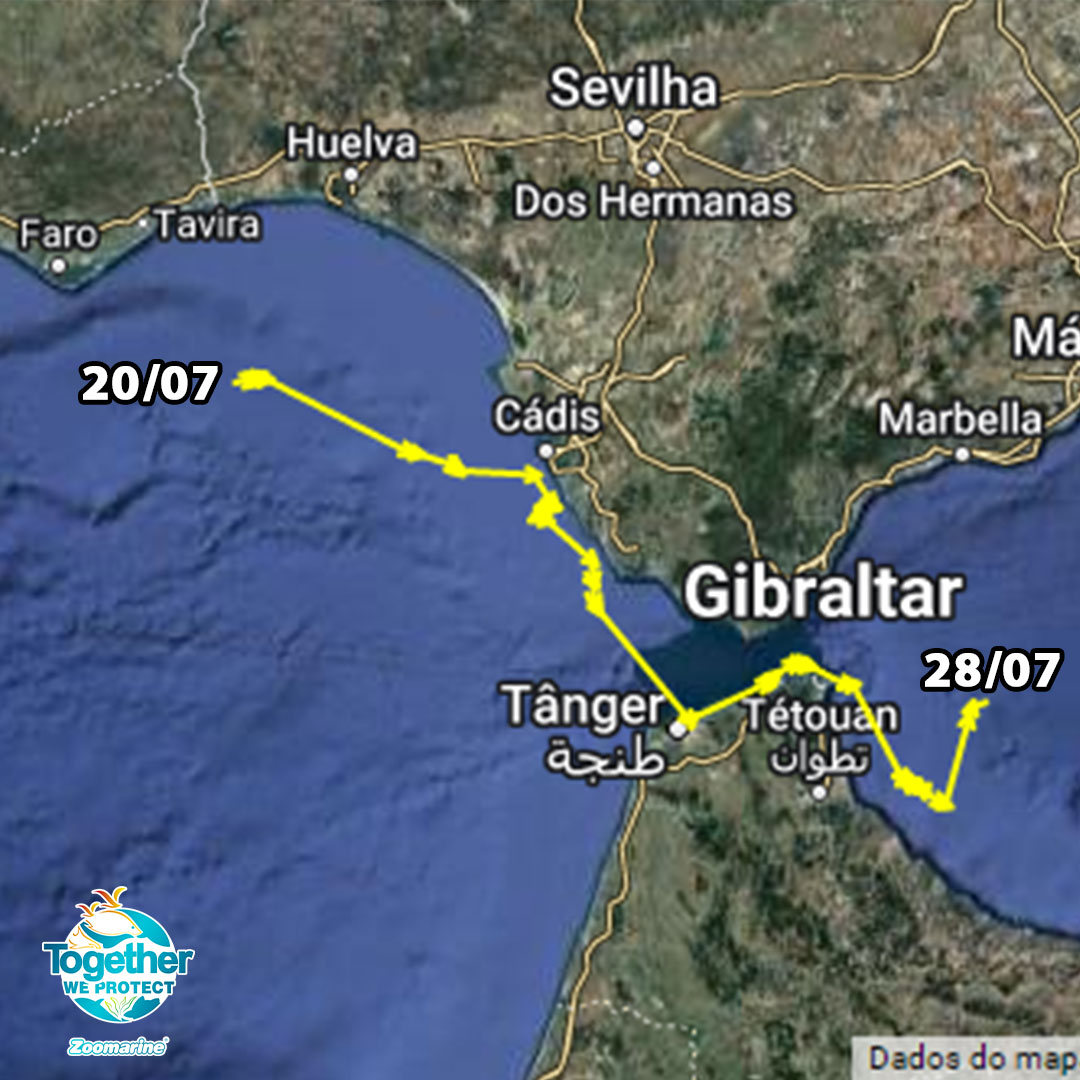
The numbers speak for themselves: 9,203 km over 13 months of monitoring. Six days after it’s release, it had already crossed the Strait of Gibraltar and entered the Mediterranean. Then came wide loops in the Alboran Sea (likely feeding), a journey along the coasts of Morocco and Algeria, passage by the Balearic Islands, a sweep around Sardinia, and finally… settlement in the Tyrrhenian Sea, between Sicily and Calabria.
It’s movement pattern? Classic for the species: summer and autumn feeding grounds in warm waters (up to 29 °C), a southward migration in winter as temperatures dropped, remaining in areas around 15 °C, at the edge of thermal comfort, but still within tolerable limits.
The mitochondrial haplotype analysis (a rather complex term for genetics) revealed an intriguing but inconclusive clue: it may have been born in the Atlantic and migrated to the Mediterranean as a juvenile (a known behaviour in the species), or it may be Mediterranean in origin, perhaps born on the beaches of Calabria, precisely the region where the sea turtle eventually settled. Science does not give us a definitive answer, but it does offer something equally valuable: population context and confirmation that Algarve waters are critical routes for turtles of multiple origins.
And why does all this matter? This turtle survived at least 392 days after rehabilitation, resuming natural patterns of migration and feeding. Every data point collected helps the international community map risk areas (fishing, temperature), critical feeding zones, and genetic links between populations.
To our knowledge, this is only the second satellite telemetry study with rehabilitated turtles in the Algarve – and the first to combine tracking with genetics. At a time when six of the world’s seven marine turtle species are threatened, every one of these stories matters.
Because sometimes, saving a turtle is not just about that one turtle. It is about understanding an entire system, protecting migratory routes, informing fisheries conservation policies, and yes, we can admit it, reminding ourselves that the work is worth it.